
Who was Abby Guy?
Abby Guy was born around 1811. She claimed she was the daughter of a woman named Pally, also known as Pal or Polly. According to Abby, Pally was a white destitute orphan in Virginia, when she was kidnapped and sold into slavery. Slave traders took Pally to Alabama, where they sold her to James Daniel.
Abby was born into slavery because her mother was enslaved. The legal doctrine partus sequitur ventrem (“that which is born follows the womb”) ensured that a child followed the legal status of the mother. If the mother was enslaved, the child was enslaved. If the mother was free, the child was free. All slave states in the United States followed the rule.
After James’s death, Pally stayed with James’s widow while James’s daughter Betsy (Betsey) Condra inherited Abby.
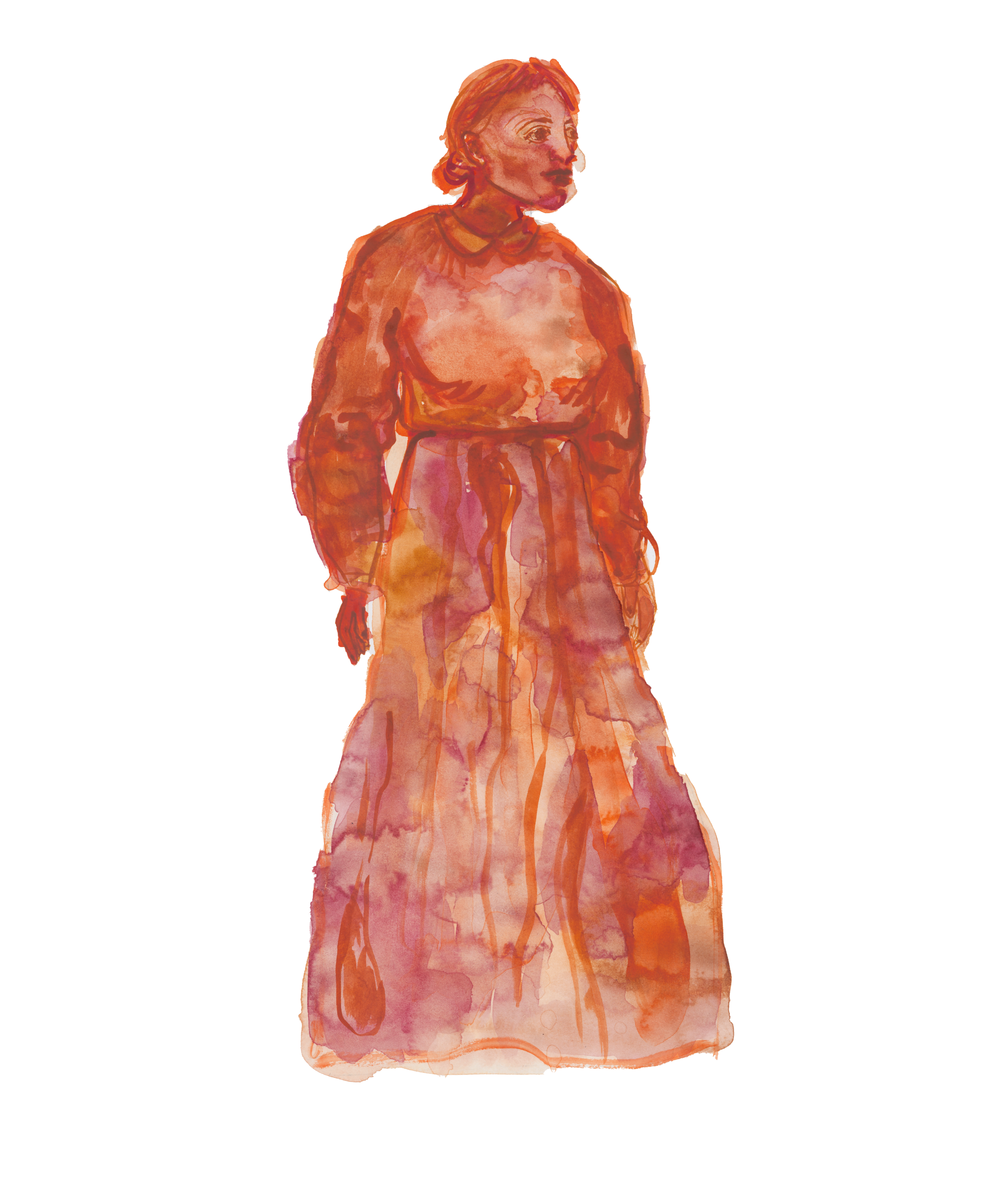
Although Abby Guy’s contemporaries discussed her appearance in detail, we do not know what she looked like. This watercolor shows how artist Skylar Boone imagines Abby.
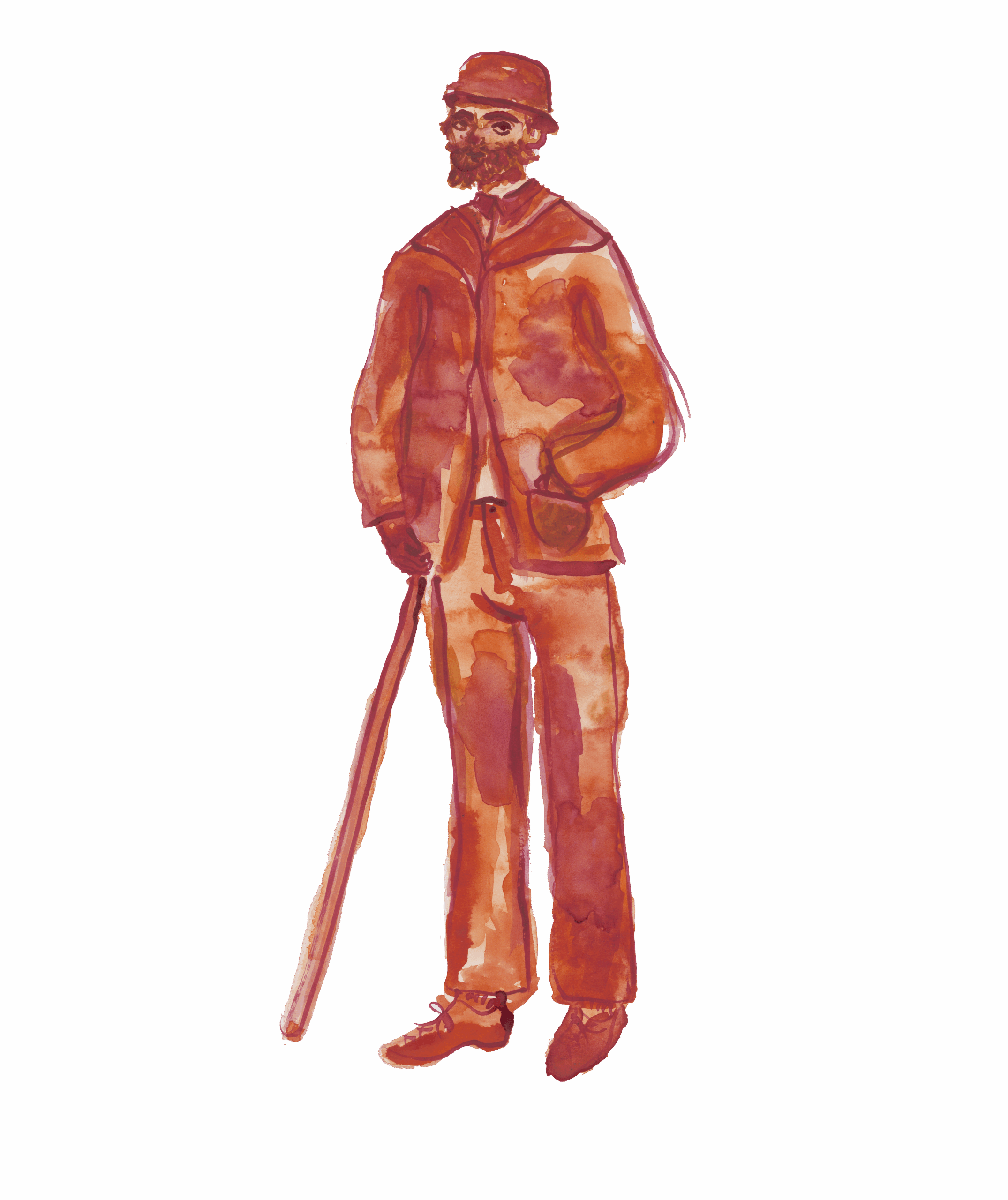
We do not know what William Daniel looked like. Artist Skylar Boone imagines him as a mid-1800 southern upper-class man .
William Daniel: The Enslaver
In 1825, William Daniel, James Daniel’s son, bought Abby from his sister and her husband for $400. Abby was just 13. Around a decade later, William sold Abby to his brother Nathaniel. Abby and Nathaniel had two daughters together, Elizabeth Frances in 1834 and Mary in 1838.
A year after Nathaniel died in 1843, William moved to Ashley County, Arkansas. He brought Abby and her two children with him. Although William later claimed that he was Abby’s and her daughters’ legal owner at the time of the move, he made a perplexing decision. While in Arkansas, he let Abby and her two children leave his estate and live independently.
Life on the Bayou
Shortly after leaving William Daniel’s household, Abby met James Guy, a white landowner. By 1845, she was living “as his wife” on Bayou Bartholomew in Ashley County. Together, they had at least two children, John and Delphia.
In 1849, James died, and Abby, now a widow, inherited his land. She continued as an active member of the local community. Abby worked on the land and hired workers who helped her. The family socialized with white neighbors, attended a white church, and Abby’s oldest, Elizabeth, went to school. In the early 1850s, Abby began relationship with a local white man, John Arnold. They had a daughter, Malissa Ann. They married in 1855, but John died shortly after.
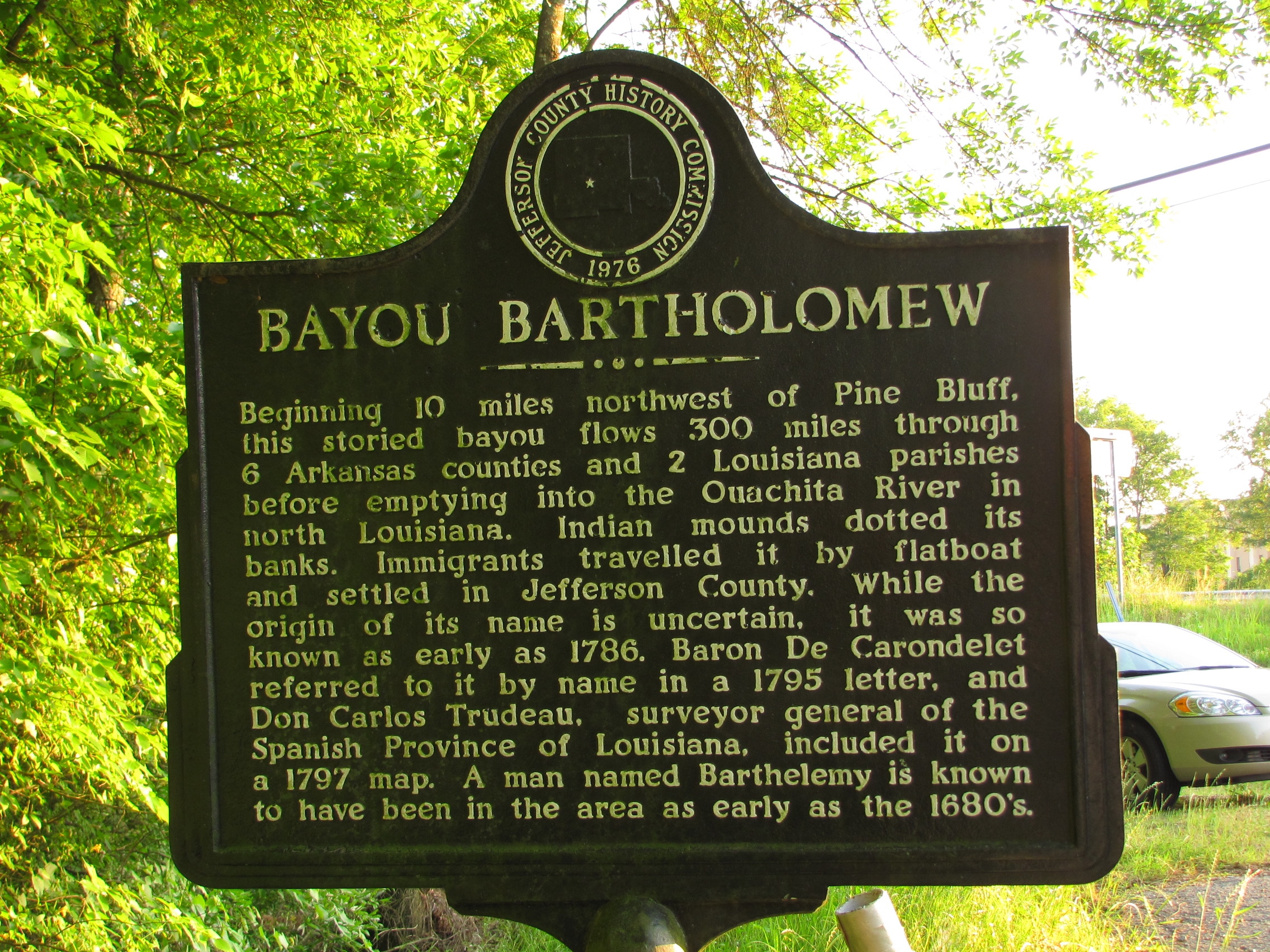
By 1845, Abby lived with her husband James and their children on Bayou Bartholomew. This historical marker, located in Jefferson County, highlights the area’s history. Photo by Lee Hattabaugh, May 10, 2010, courtesy of the Historical Marker Database.
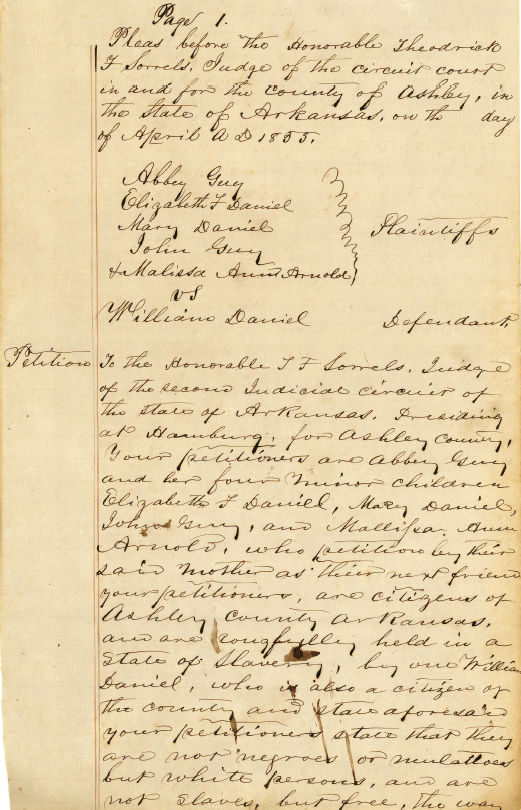
Page 1 of the Guy v. Daniel case in the Ashley County District Court containing the petition made by Abby Guy. Courtesy of UA Little Rock William H. Bowen School of Law Library.
Guy v. Daniel
On December 1, 1854, William Daniel kidnapped Abby and her children. In early 1855, Abby sued William, claiming he had illegally enslaved them. Abby and her lawyers used three strategies to build their case. First, they alleged that Nathaniel emancipated her and their two children in his will. Second, they claimed that Pally, Abby’s mother, was “free” and “white” and that her wrongful enslavement resulted from kidnapping. Finally, they used Abby and her family’s standing in the community to prove she was white, and therefore, could not be enslaved.
On the other side of the lawsuit, William believed he had every right to Abby and her children. He disputed Abby’s emancipation story, claiming that in 1842, Nathaniel surrendered his rights to Abby and her two children to cancel his debts. He also presented Nathaniel’s will and the document reportedly did not name Abby and her children. Finally, he denied Pally was white. Since his father raised Pally as a slave, William argued, she must have been black; therefore, Abby was also black. According to the laws and customs of the slavery system in the United States, white individuals could never be enslaved.
Click for Transcription of Image
Pleas before the honorable Theodoric F Sorrels, judge of the circuit court in and for the county of Ashley, in the State of Arkansas, on the day of April AD 1855.
Plaintiffs: Abbey Guy, Elizabeth F Daniel, Mary Daniel, John Guy, Malissa Anne Arnold
Defendant: William Daniel
Petition: To the honorable T F Sorrels, judge of the second judicial circuit of the state of Arkansas, presiding at Hamburg, for Ashley County.
Your petitioners are Abbey Guy and her four minor children Elizabeth F Daniel, Mary Daniel, John Guy, and Mallissa Anne Arnold, who petition by their said mother as their next friend your petitioners, are citizens of Ashley County, Arkansas and are wrongfully held in a state of slavery, by one William Daniel, who is also a citizen of the county and state aforesaid your petitioners state that they are not negroes or mulattoes but white persons, and are not slaves, but free, the way…
What Is Race?
When asked in court what Pally looked like, witnesses responded she was “a yellow woman darker than white, a tolerably bright mulatto, and a shade darker than Abbey.” They also talked about “a curl on the side of [Pally’s] head.” The single curl was to prove she was black since her skin tone was ambiguous. Other witnesses said they did not know whether Pally looked black or white but because she was enslaved, they assumed she was black. A witness concluded, “[Pally] was not black not white.”
Abby and her lawyers were unable to present evidence that her mother was “free” and “white.” However, they believed they could prove that Abby was white and therefore could not be enslaved.
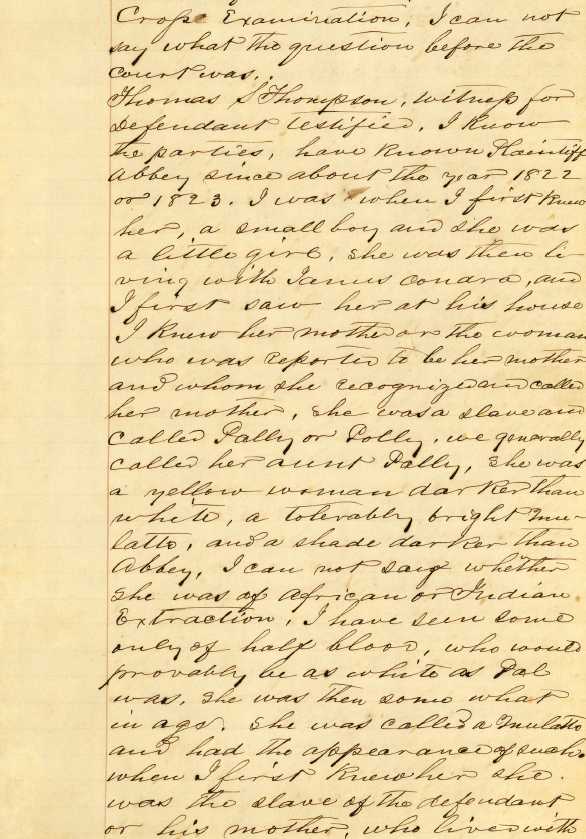
Page 25 of the Guy v. Daniel case in the Ashley County District Court containing witness statements about Pally’s skin tone and hair. Courtesy of UA Little Rock William H. Bowen School of Law Library.
Click for Transcription of Image
Cross Examination. I can not say what the question before the court was. Thomas S Thompson, witness for Defendant testified, I know the parties, have known Plaintiff Abbey since about the year 1822 or 1823. I was when I first knew her, a small boy and she was a little girl, she was then living with Janus Condra, and I first saw her at his house I knew her mother or the woman who was reported to be her mother and whom the recognized and called her mother, she was a slave and called Pally or Polly, we generally called her aunt Pally, she was a yellow woman darker than white, a tolerably bright mulatto, and a shade darker than Abbey. I can not say whether she was of African or Indian Extraction, I have seen some only of half blood, who would probably be as white as Pal was. She was then some what in age. She was called a mulatto and had the appearance of such. when I first knew her she was the slave of the defendant or his mother, who lived with…

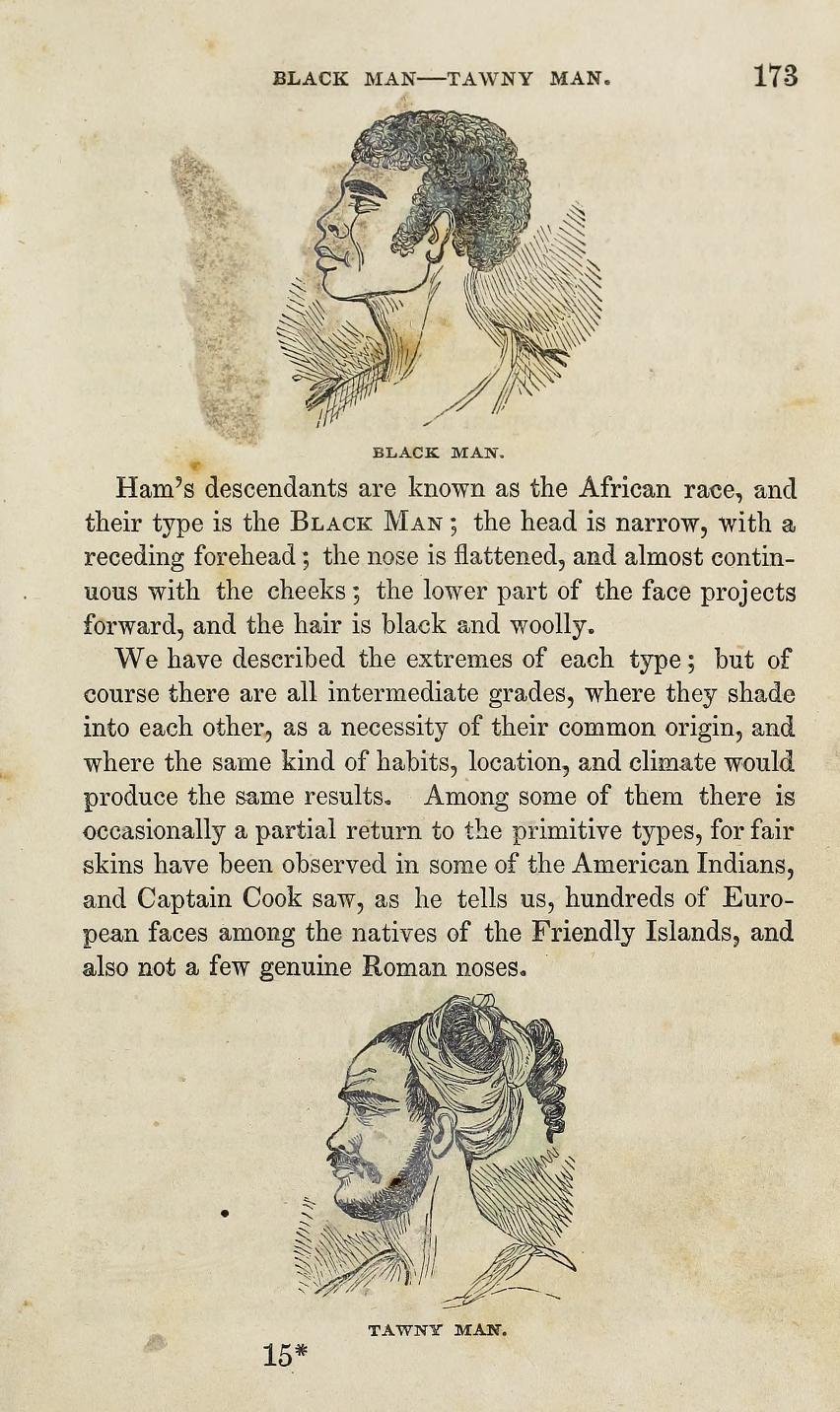
In the 1800s, the advocates of scientific racism argued that humans were divided into biological entities called “races” and that a set of objective factors defined each “race.” These pages from John B. Newman’s First Book in Physiology: With Anatomy, and the Laws of Hygiene (New York, 1851) illustrate how contemporary medical experts thought of race.
Race Science
The judge reminded the jury to use their “knowledge” and “observation and inspection” to determine Abby’s identity. The jury examined Abby, Elizabeth, Mary, John, and Malissa. Their bodies became evidence in the courtroom.
Abby’s lawyers called two experts in “physiology” to provide more clarity. But could science explain race? The witnesses claimed the existence of “five races.” Physical features such as “hair, feet, nose[s], and form of skull and bones” were to distinguish distinct races. However, the experts confused the courtroom even more when they alluded to the open secret of American slavery. Intimate relationships between black and white people were illegal. Yet, everyone knew that many enslaved children had white fathers. The experts testified that within several generations, “black” features could “run out.” The jury faced the question: Even if Abby’s ancestors were not white, was it possible that she was now white? What they needed to decide in a society that believed in clear-cut racial categories was where blackness ended and whiteness began.
Race and Law
Abby’s lawyers did not intend to determine whether Abby was white or black. The asked the jury to decide whether Abby was legally or wrongfully enslaved. Why did it matter then whether the jury considered Abby and her children to be white or black? The laws of the United States and Arkansas in the mid-1800s give us an answer.
In Arkansas, a person defined as “mulatto,” or anyone with at least one black grandparent, could be legally enslaved. According to an 1843 Arkansas law (see images) no free black person or “mulatto” could move to and settle in Arkansas. The Fugitive Slave Act of 1850 strengthened the earlier federal fugitive slave law and made it easier to arrest any person suspected or accused of escaping slavery anywhere in the country. In 1859, two years before the conclusion of Abby Guy’s case, Arkansas passed Act 151. The bill banned free black Americans and those defined as “mulatto” from living in Arkansas. These laws, among others, would have affected Abby and her children depending on how the jury understood Abby’s racial identity.
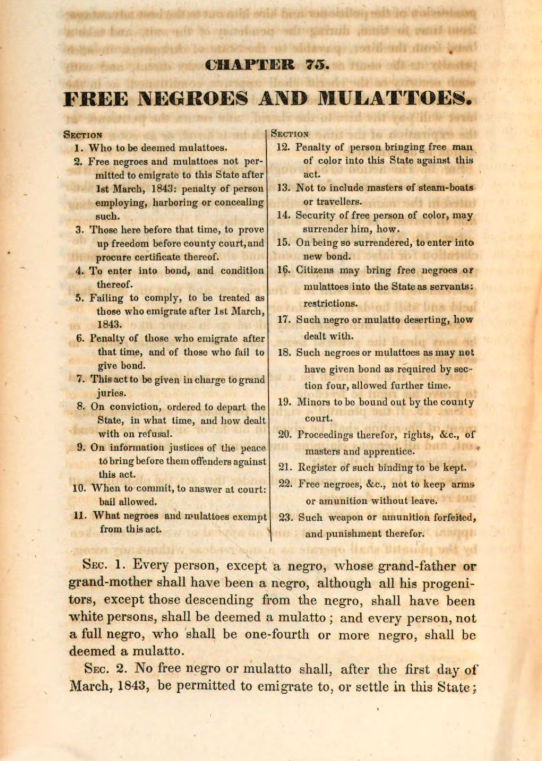

An 1843 Arkansas law defining “mulatto” and banning free black persons and “mulattos” from migrating to and settling in Arkansas. A Digest of the Statutes of Arkansas by E. H. English (Little Rock, 1848): 546-547.
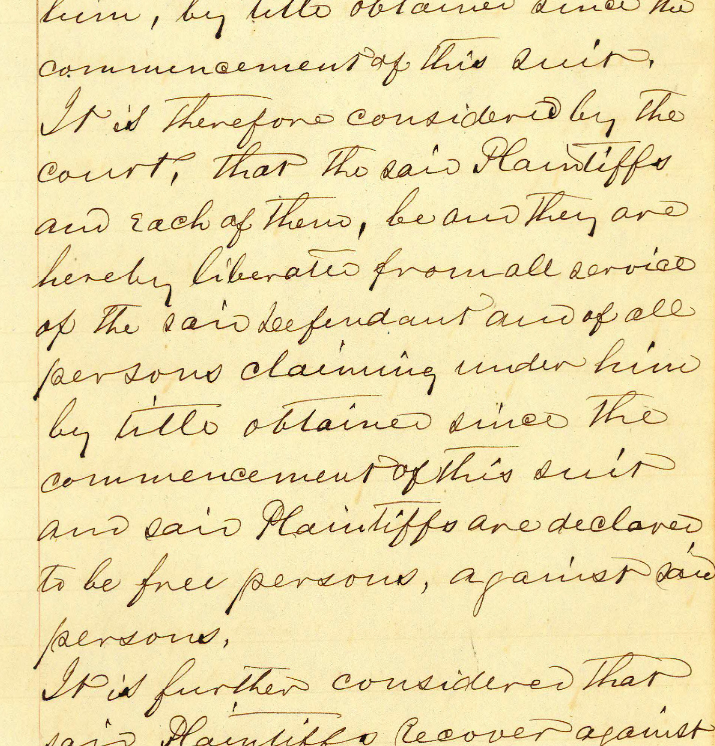
Page 17 of the original files of Guy v. Daniel in the Ashley County District Court containing Judge Sorrels’s verdict. Courtesy of UA Little Rock William H. Bowen School of Law Library.
Abby’s First Victory
On April 6, 1855, the jury declared Abby and her children free. They admitted that the evidence William provided cast doubt on some of Abby’s claims. Still, the twelve white men, some of whom were slave owners, decided that Abby’s acceptance in the white community of Bayou Bartholomew was a stronger argument.
But the legal battle did not end here. William Daniel’s attorney appealed for a new trial. He argued the verdict went against the evidence and that the court made errors. His appeal eventually reached the Arkansas Supreme Court.
Click for Transcription of Image
It is therefore considered by the court that the said Plaintiffs and each of them, be and they are hereby liberated from all service of the said Defendant and of all persons claiming under him by title obtained since the commencement of this suit and said Plaintiffs are declared to be free persons, against said persons.
Legal Battle Continued
The 1857 Daniel v. Guy Supreme Court decision shook the foundations of the Arkansas legal system. The court determined three questions. First, a person less than one-fourth black could be enslaved in the state because “the child takes the condition of the mother.” Second, the court rejected the definition of “mulatto” established by an 1840s statute (a person with one black grandparent). It noted that other Arkansas laws and “the people of this State” considered any person of mixed race “mulatto … without regard to grades.” Arkansas became the first state where “the one drop rule” became the legal standard. Anyone with any African ancestry was to be considered a person of color. Lastly, if there was no convincing evidence whether someone was black or white, “it [was] safest” to assume a person was white “as the courts should be careful that a person of the white race be not deprived of his liberty.” The Arkansas Supreme Court confirmed that a white person should never have been enslaved.
Without deciding on Abby’s case, the Supreme Court awarded William a new trial in Drew County because of the errors he and his lawyers had claimed.
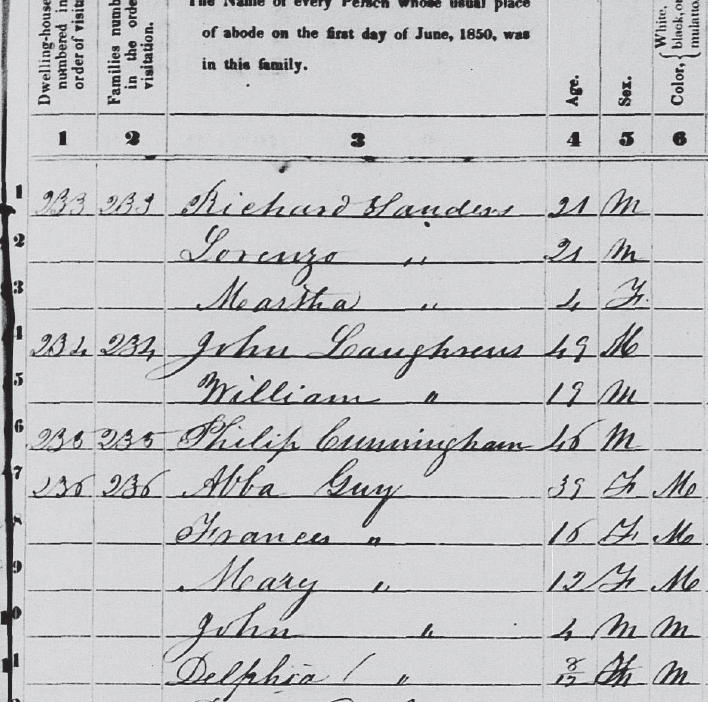
The 1850 census lists Abby Guy and her children as “M,” which stands for “mulatto.” The 1857 Daniel v. Guy case expanded the legal definition of “mulatto” in Arkansas but did not determine Abby’s identity.
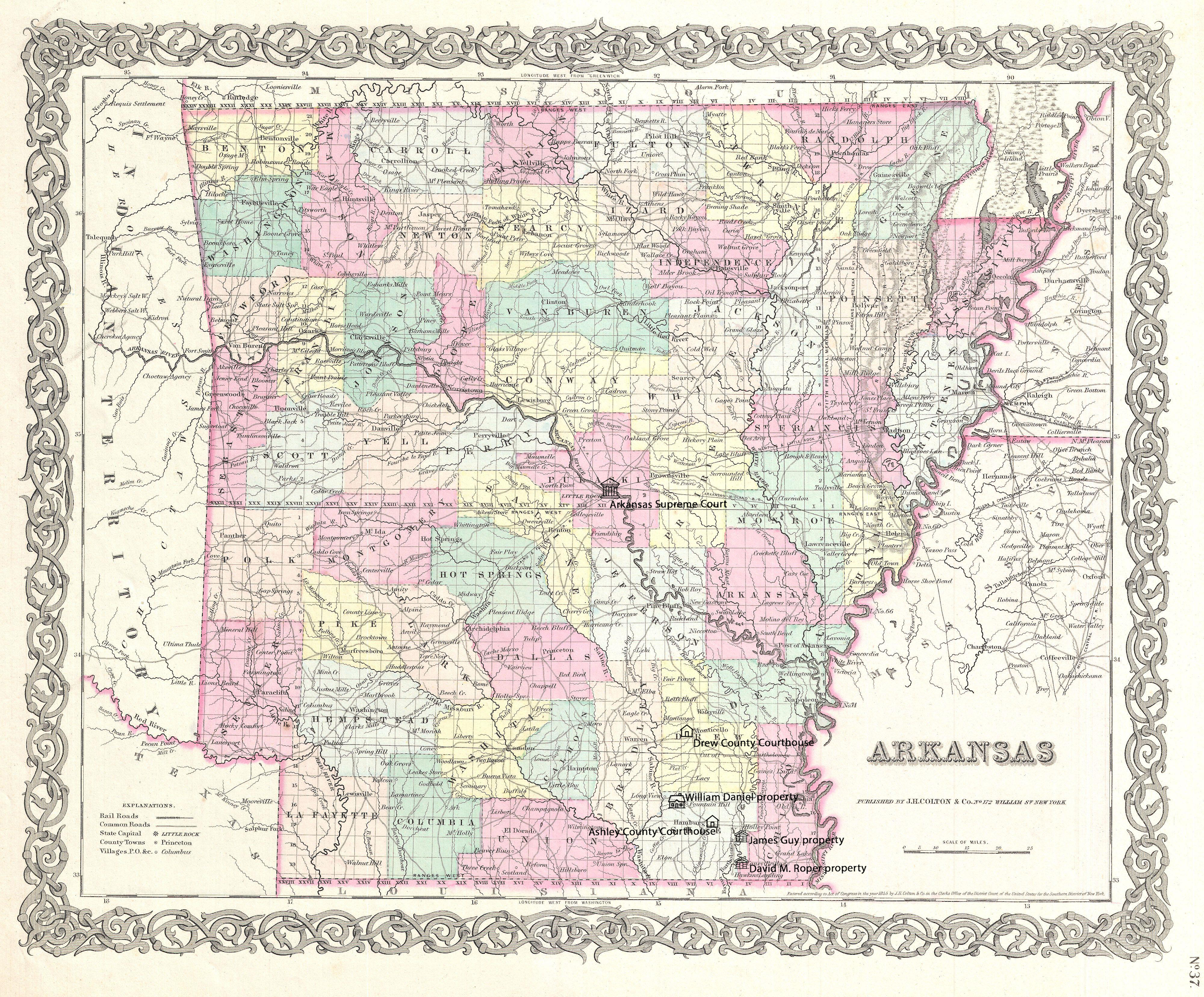
This 1855 map of Arkansas, published by J. H. Colton, includes the key Arkansas sites of the Guy v. Daniel case. David Roper was Abby’s third husband. In 1863, Abby sued William Daniel for the return of her property as Abby Roper. Property locations by Emily Housdan, based on Gregory A. Boyd, Family Maps of Ashley County (Arphax Publishing Co., 2007).
Finally Freed
In 1859, at the Drew County Courthouse, Abby and her children’s bodies, again, served as evidence. This time, it was Abby’s lawyers who insisted that the jury inspect Abby and her children. The five plaintiffs removed their shoes and stockings to show their feet. William and his lawyers did not question that human bodies could have served as evidence in the case. But they objected to the inspection of feet.
The Drew County Court reached the same verdict as the Ashley County Court: Abby and her children were free.
William Daniel and his lawyers appealed the decision. They insisted that the foot inspection was not proper evidence. The case, once again, reached the Arkansas Supreme Court. This time, the Court saw no reason to grant William another trial. In its 1861 decision, the Arkansas Supreme Court concluded, “It is possible that the jury found against the preponderance of evidence, through reluctance to sanction the enslaving of persons, who, to all appearance, were of the white race, and, for many years before suit, had acted as free persons and been treated as such.” William presented strong evidence undermining some of Abby’s claims. But Abby “had acted … and been treated” as a free person. And a no white person should have been enslaved.
Why Abby Won?
In 1859, two years before the final decision in Abby Guy’s case, the Supreme Court of Arkansas heard a case that equated blackness with enslavement and whiteness with freedom. In Ewell v. Tidwell, the Court justified slavery by claiming the biological inferiority of black people.
Abby won because the white community of Bayou Bartholomew had accepted her and her children as equals and therefore white. If Abby had lost, it would have implied that white Arkansans were unable to differentiate a white person from a black person; that a black person deceived them for a decade.
Abby also proved to be a skilled farmer, savvy property owner, and mother committed to her children’s success. If the jury concluded that her enslavement was legal, and thus she was black, they would have admitted that a black woman was as capable as any white person. Abby’s loss would have implied that a black person was equal to a white person, shaking the foundations of a society built on racial hierarchies.
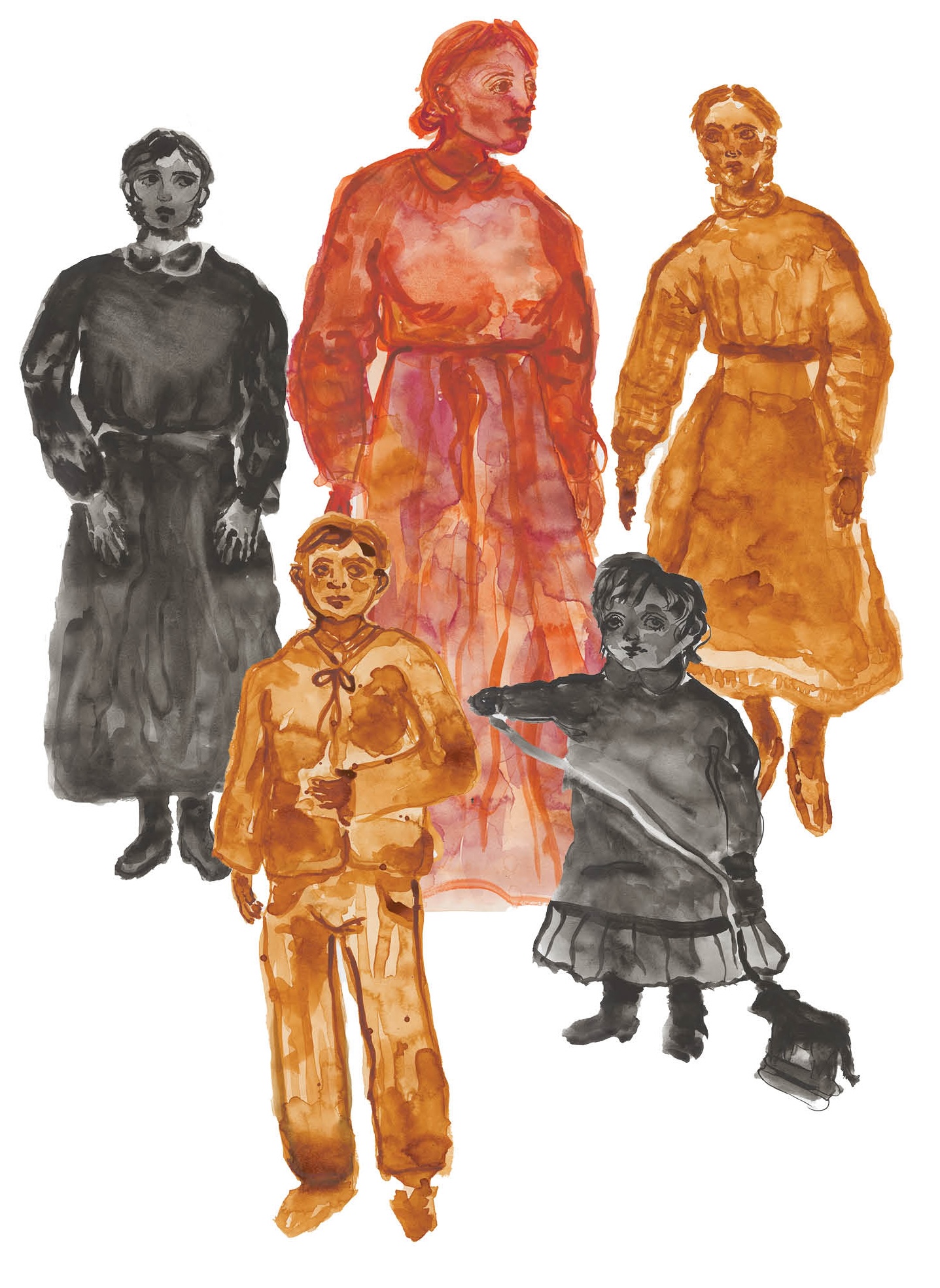
Abby Guy and her children, Elizabeth Daniel, Mary Daniel, John Guy, and Malissa Anne Arnold, imagined by artist Skylar Boone.
Additional Resources
- Gross, Ariela J. “Litigating Whiteness: Trials of Racial Determination in the Nineteenth-Century South.” The Yale Law Journal 108, no. 1 (1998): 109-188.
- Mahan, Russell. Abby Guy: Race and Slavery on Trial in an 1855 Southern Court. Santa Clara (UT: Historical Enterprises, 2017).
- Shafer, Robert S. “White Persons Held to Racial Slavery in Antebellum Arkansas.” The Arkansas Historical Quarterly 44, no. 2 (1985): 134-155.
Arkansas Social Studies Standards
- Arkansas History Grades 7/8: H.1.ARH.7
- United States History Grade 8: H.4.8.3
- African-American History: H.4.AAH.2 and H.4.AAH.3
About the Exhibit
This digital exhibit is based on the physical exhibit “Slavery and Freedom: Journeys Across Time and Space,” on display at UA Little Rock Downtown, 333 President Clinton Ave., Little Rock from May 3 through October 31, 2024. The original exhibit was developed in partnership with the Musée de Villèle in Réunion Island, France, and supported by a grant from the Arkansas Humanities Council and the National Endowment for the Humanities.
Digital exhibit design and text adapted from the original exhibit by James Youngblood.
Original watercolors by Skylar Boone.
The original “Slavery and Freedom: Journeys Across Time and Space” exhibit was created by by Dr. Marta Cieslak, Emily Housdan, Dr. Nathan Marvin, and Dr. Jess Porter.