
This lesson explores how artists respond to current events and social issues using the case study of Joe Jones and his 1935 mural, The Struggle in the South. The mural is located at UA Little Rock Downtown (333 President Clinton Ave., Little Rock).
Trigger Warning: The lesson contains sensitive images of racial violence in the form of lynching. Scaffold the material to ensure that it is age-appropriate.
Essential Questions
How can current events influence art?
Why do artists respond to current events and social issues?
What is the purpose of socially engaged art?
How can art influence social change?
Background Knowledge
Artists have always created art to bring attention to important societal issues. Socially engaged art advocates for a cause and raises social awareness. Protest art, a form of socially engaged art, takes an additional step by encouraging audiences to take action to help make the world a better place for everyone. Socially engaged works can be created in any medium, for example, painting, drawing, sculpture, music, video, or performance. While art alone may not solve the problems that societies and individuals face, it can raise awareness, particularly when artists create protest art in public spaces where it is readily visible. The goal of socially engaged art is to question how things are, to draw our attention to the problems societies face, and to imagine a world in which all can live healthy and stable lives.
The Great Depression provided artists with numerous reasons to create socially engaged art.
The Great Depression was the most severe economic crisis in history. It began in 1929 in the United States, but soon affected the global economy too. The unemployment rate among adult Americans was as high as 20-25%. The national production rate declined by more than 30%. The prices of goods and services fell dramatically, yet many went hungry and could not afford basic necessities. The low prices of cotton and other agricultural products put farmers in a particularly vulnerable position. Among them, sharecroppers, who struggled long before the onset of the depression, found themselves in often dire circumstances. In cities and towns, those lucky enough to have jobs often experienced even more exploitation than before the crisis. The high unemployment rate facilitated employers’ replacement of anyone who might have opposed unfair labor practices or dangerous working conditions.
The Struggle in the South, Encyclopedia of Arkansas: https://encyclopediaofarkansas.net/entries/struggle-in-the-south-mural-14379/.
Federal Art Project of the Works Progress Administration (The Art Story): https://www.theartstory.org/definition/federal-art-project-of-the-works-progress-administration/
Allison Rudnick, “The Art of the Great Depression, 2023 (The Metropolitan Museum of Art): https://www.metmuseum.org/perspectives/the-art-of-the-great-depression. [This essay demonstrates how rich and varied the art of the Great Depression period was in the United States.]
What is Protest Art? by Tate Kids: https://www.youtube.com/watch?v=1_iqS_disW0.
Learning Objectives
By the end of this lesson, students will:
- Determine how current events and mundane daily experiences may influence art.
- Understand why artists create socially engaged art.
- Explain how history can be shown in art.
- Explain key elements of protest in Joe Jones’s The Struggle in the South.
Key Terms
Protest art – Creative works produced to draw attention to social or political issues and encourage the audience to take action to address these issues.
Great Depression – A Worldwide severe economic crisis that lasted from 1929 to about 1939.
Mural – Any graphic artwork that is painted or applied directly to a wall, ceiling, or other permanent surface.
Social justice – The view that everyone deserves equal opportunities and rights.
Lynching – The public killing of an individual without a legal trial, often by a mob.
Strike – A work stoppage by workers, often to protest unfair or unsafe conditions and to force an employer to meet the workers’ demands.
Sharecropping – A system where a tenant rents land in exchange for a share of the crop, often with high interest rates and debt.
Materials
The transcription of Doc. 1 offers a selection of relevant sections that highlight Jones’ approach to art.
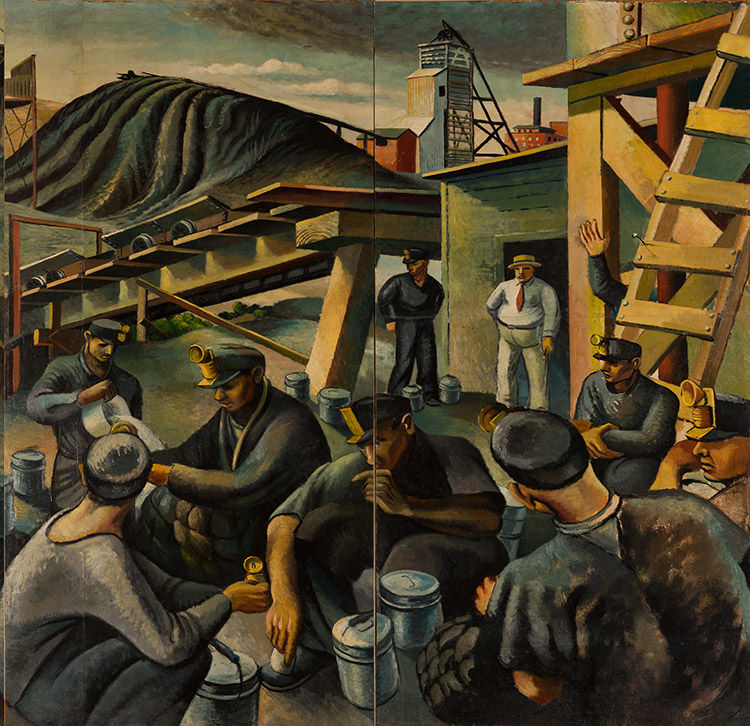

Panel 2: Lynching
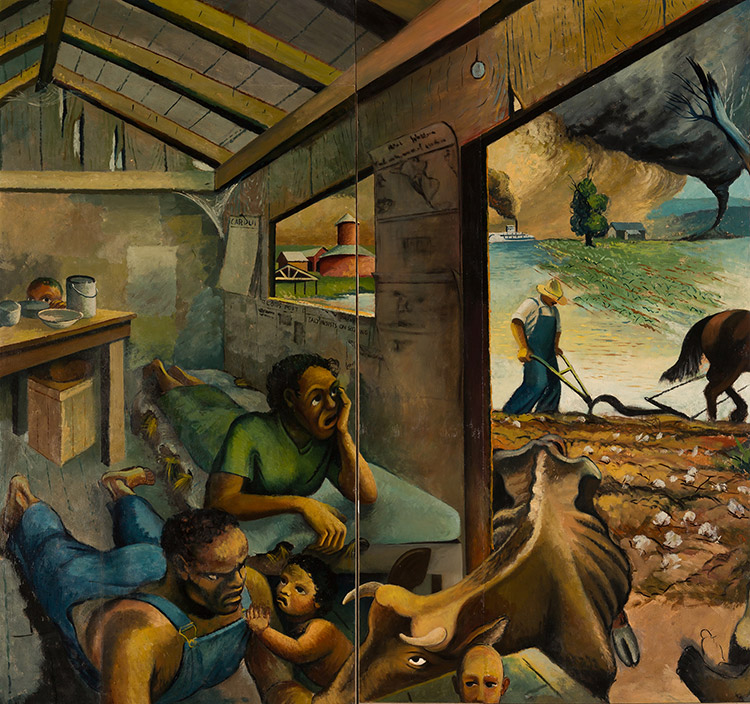
Panel 3: Sharecropping family
Click here to learn more about the Joe Jones mural, The Struggle in the South (1935)
Procedures
1) Starter
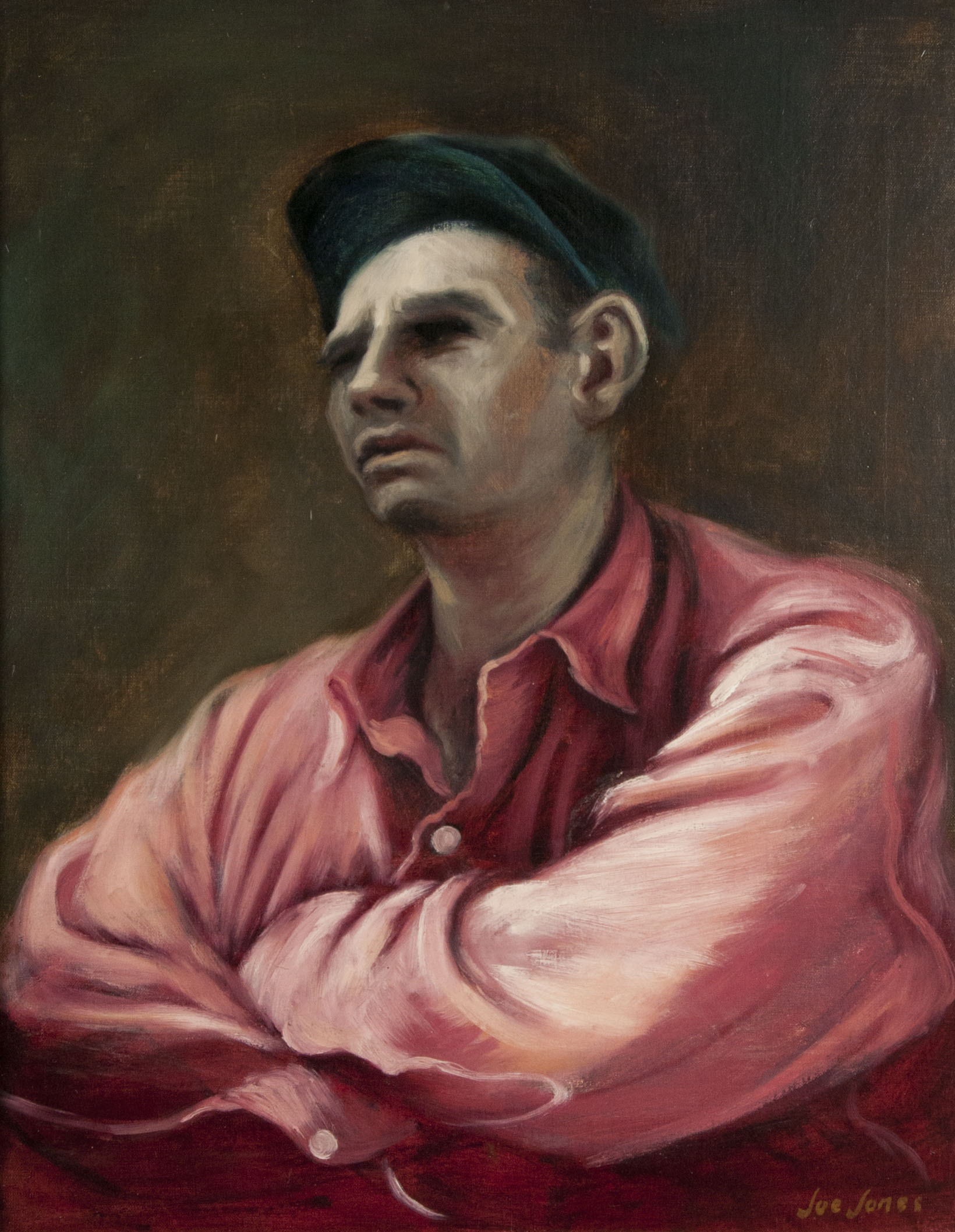
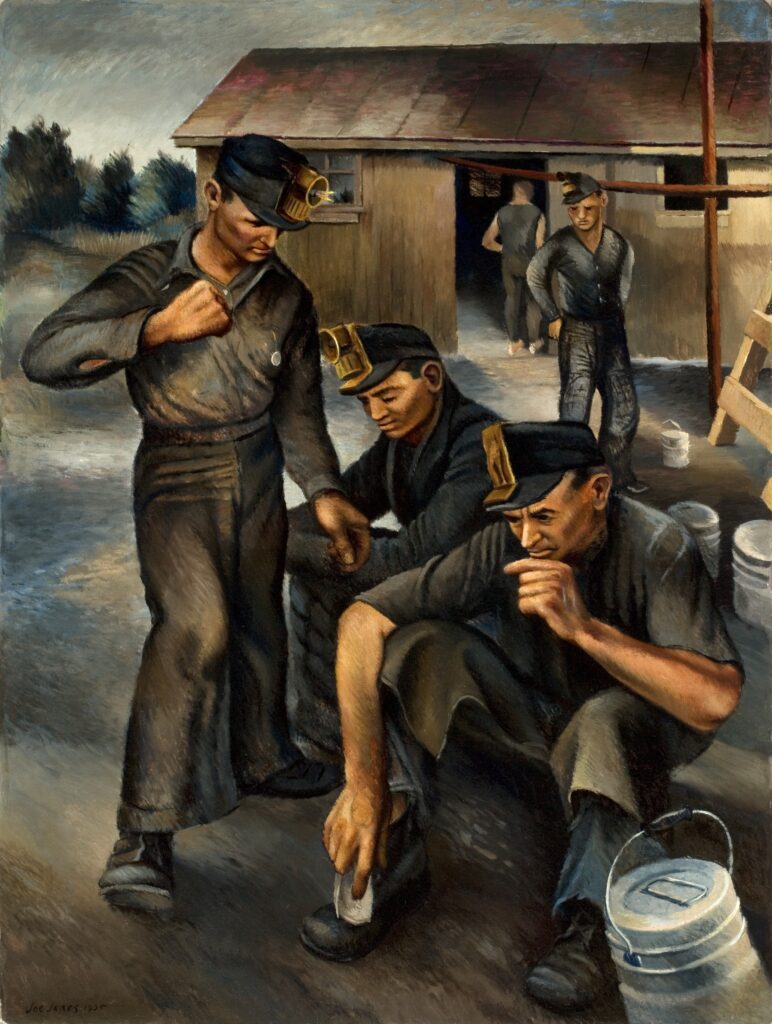
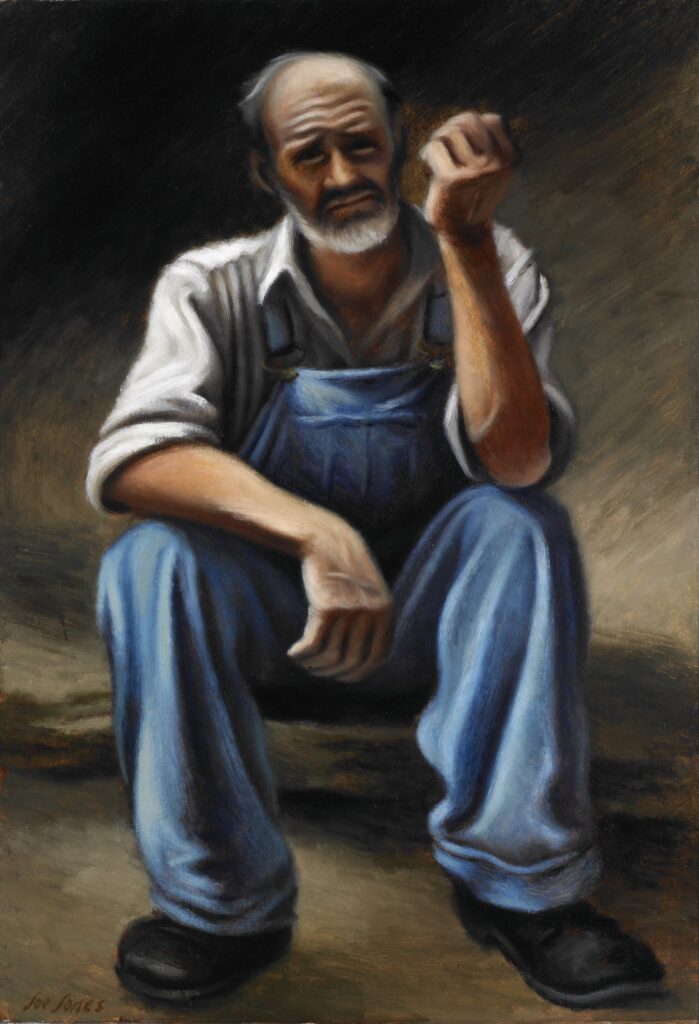
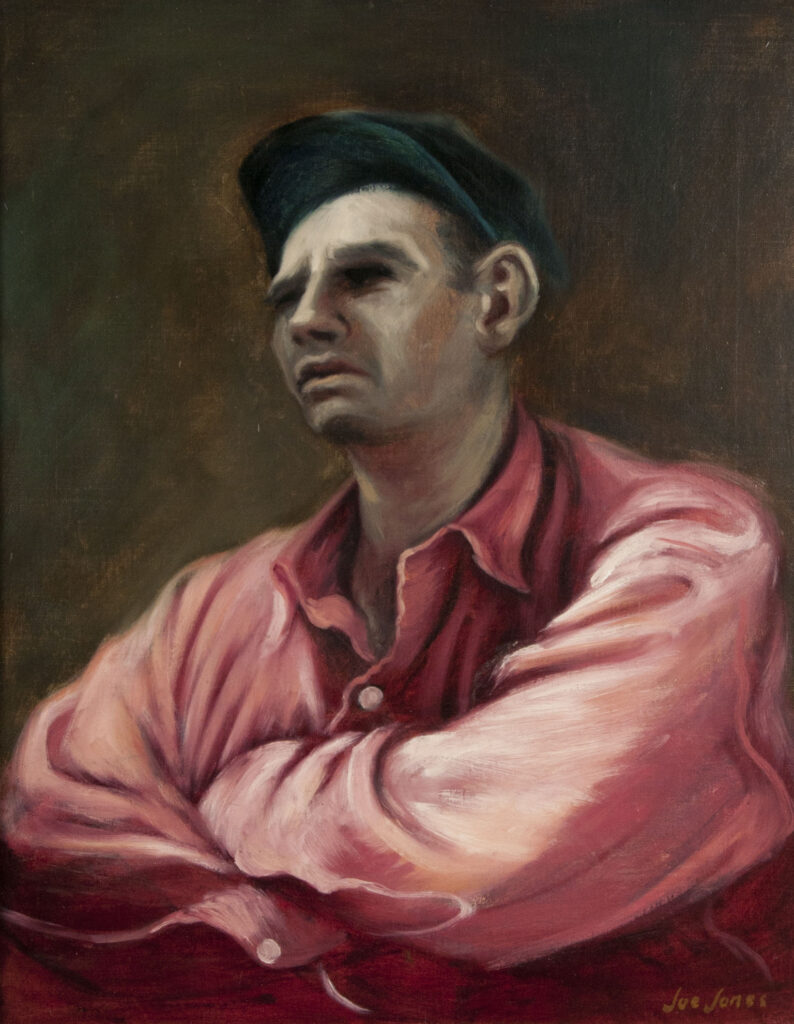
Show students Images 1-3 from the Materials section and ask them to describe the people depicted in these paintings.
Note that the three paintings were created during the Great Depression by Joe Jones, who began his career as a house painter at age 14. Ask the students whether artists are workers, and point out that, in the self-portrait (Image 3), Jones sought to be seen as both an artist and a worker.
You might compare these images with those of famous paintings that depict wealthy and powerful figures. Tell the students that paying an artist to paint a portrait was and still is available only to affluent individuals.
2) Guiding questions
How did Joe Jones respond to the plight of ordinary people during the Great Depression?
What can we learn about the Great Depression from Joe Jones’s 1930s paintings?
How can artists raise awareness of important current events?
3) Background information
Joe Jones (1909–1963), an American artist born and raised in St. Louis, painted The Struggle in the South on the walls of the dining hall in Commonwealth College near Mena, Arkansas, in 1935. The mural portrays the lives of ordinary Southerners during the Great Depression. Jones painted three scenes that captured what he considered the most pressing challenges that the Southerners faced: the struggles of industrial workers represented by miners who are preparing to start a strike, racial violence targeted at African Americans represented by a scene of lynching, and the struggles of rural workers represented by a destitute sharecropping family.
Jones, who began his career as a housepainter at the age of fourteen, turned to socially engaged and protest art during the Great Depression. In the 1930s, he often portrayed ordinary working Americans, such as farmers, miners, and poor city dwellers. He was an anti-lynching activist and produced at least five pieces of art that drew attention to racial violence. He also taught art classes to African American and white unemployed workers in St. Louis at a time when education in Missouri and other Southern states was segregated, and many white Americans opposed racial integration.
The Struggle in the South is currently housed at UA Little Rock Downtown (333 President Clinton Ave., Little Rock) and is available to the public.
4) Activities
— Show students the Joe Jones mural and ask them to analyze it.
You may use Visual Thinking Strategy (VTS). [This activity can be done verbally, or students can take notes; learn more about VTS from GVSU Art Museum].
Three key questions at the core of VTS:
– What’s going on in this picture?
– What do you see that makes you say that?
– What more can we find?
1. After students silently examine the art, the teacher asks, “What’s going on in this picture?” The teacher calls on one student. As the student responds, the teacher points to the image features the student mentions, if any.
2. The teacher then asks the student the second question: “What do you see that makes you say that?” Again, the teacher points to the evidence in the image while the student speaks, then paraphrases.
3. The third and final question welcomes other student responses: “What more can we find?” When another student responds, the teacher continues to repeat the second and third questions, linking the other student’s response.
— Have students read and analyze either of the two newspaper articles (Doc. 1 and 2) included in the Materials section. These provide additional information about Jones and the factors that drove his passion for socially engaged art. Ask the students if the mural helped them understand the struggles of ordinary people during the Great Depression, as Jones intended.
— Reveal the mural’s history and tell the students it was and still is located in Arkansas.
Question for students: What questions do you have about the mural now that you know its history?
— After the mural analysis, ask students:
Is there any current event or social issue that you would like to represent in art?
Students produce their own visual art piece that aims to raise awareness of their chosen cause.
5) Rubric
[1 – 5] Exceeding/proficient/novice/emerging/unsatisfactory
Were you engaged and actively participating?
Can you articulate the understanding of key concepts?
Can you accurately identify examples of the representation of historical events/processes in art (e.g., the Great Depression)?
Can you explain why artists may want to display current events in art?
Assessment
Exit ticket possible questions:
What makes art socially engaged art?
In what ways is Joe Jones’s mural protest art?
Reflection
In what ways can socially engaged art work? Discuss an example of art that shaped your views and/or helped you understand a social problem. Remember that art comes in many forms. It may be a painting or mural, but also a film, dance performance, or song.
Do you think socially engaged art is more effective now than in the past? Provide examples.
Extension Relevance
Compare and contrast examples of protest art produced by different artistic movements, such as surrealism, pop art, street art, and graffiti.
Field trip: Visit UA Little Rock Downtown to see Joe Jones’ mural.
Arkansas Fine Arts Standards
| Art History (Baroque to Contemporary) | |
| Visual Art Participation | |
| Painting I-II | |
| Visual Art Foundations I-IV | |
| Visual Art K-8 | CN.11 |
| Studio Art 2-D | CN.10 |